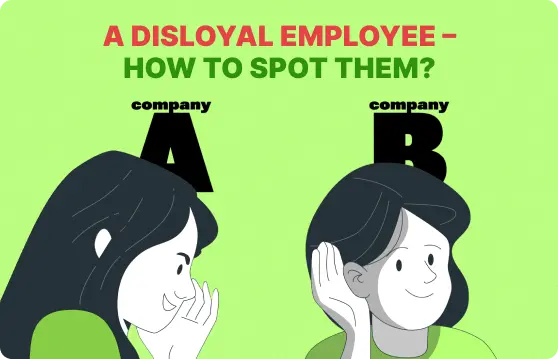
A Disloyal Employee – How to Spot Them?

Employee loyalty is one of the foundations of a healthy and productive workplace. Loyal employees protect company interests, contribute to team morale, and help businesses grow over time.
On the other hand, disloyal employees can damage company culture, leak sensitive information, and negatively affect performance.
In the labor market, loyalty is a valuable feature of a good employee. Its weight is significant and contributes to a high degree of discipline and compliance. In our view, employee loyalty is the best protection against, among other things, leakage of valuable corporate data.
So how can employers recognize the warning signs early? And more importantly, how can businesses encourage loyalty before problems arise?
What Does Employee Loyalty Really Mean
Employee loyalty goes beyond simply staying at a company for years. A loyal employee supports the organization’s goals, performs their responsibilities reliably, and acts in the company’s best interest even during difficult periods.
Loyal employees usually:
- Respect company policies and values
- Protect confidential business information
- Communicate honestly with management
- Stay committed during challenging situations
- Support teamwork and productivity
Loyalty also includes professionalism. Employees may take on additional work outside the company, but conflicts begin when they use confidential knowledge, company resources, or client information for personal gain or competitors’ benefit.
Signs of a Disloyal Employee
Disloyalty is not always obvious in the beginning. Often, small behavioral changes appear before major issues occur. Employers who pay attention to these signals can prevent serious damage later.
Common warning signs include:
- Sudden drop in productivity
- Negative attitude toward management or coworkers
- Lack of engagement in company goals
- Sharing confidential information
- Frequent policy violations
- Unusual secrecy around work activities
- Attempts to undermine colleagues or leadership
- Increased absenteeism or lack of accountability
While one sign alone does not confirm disloyalty, repeated patterns should not be ignored.
Boost your business productivity
Track performance and streamline teamwork
How to develop the loyalty of employees
Creating true employee loyalty is a very difficult task. It’s a long-term process, which should be a permanent element of HR activities. The process includes, among other things, the dissemination of a positive image of the employer among current and future employees. Thanks to this, we can count on faster and more efficient recruitment. A positive image of the company on the labor market also has a huge impact on employees because it meets their needs and has a positive impact on their self-esteem.
You should also remember to build a relationship with an employee from the very first days. Take care of such issues as: adaptation of new employees, integration into teams, training and, if possible, career development. It’s worth making sure that the job is interesting for the employee and gives him or her a chance for self-realization. Greater discretion and impact on the professional environment can also increase employee engagement and, as a result, have a positive impact on loyalty.
It is also recommended to inform the employee about key changes planned in the organization. This is extremely important because it makes employees feel valued and important to the organization. Building loyalty does not stop there. Completion of cooperation can also be an important part of loyalty building. An employee who quits his job in a bad relationship with his employer is a serious threat to the company’s image; moreover, he is more likely to share confidential information with people outside the company.
Thus, the loyalty of employees is a complex issue. Today it is worth remembering that good relations in the company and partnership with employees pay off. However, it is not a safe investment, so watch closely if you have any doubts. A disloyal employee is a huge threat for any business.
The Role of Leadership in Employee Loyalty
Managers and business leaders have a major influence on workplace loyalty. Employees are more likely to stay committed when leadership is transparent, respectful, and supportive.
Poor leadership often leads to frustration, disengagement, and eventually disloyal behavior. Strong leaders, however, create an environment where employees feel appreciated and motivated to contribute.
Conclusion: Employee Loyalty
Employee loyalty is essential for long-term business success. Loyal employees strengthen company culture, protect sensitive information, and contribute to a productive work environment. At the same time, disloyal employees can create serious operational and reputational risks if warning signs go unnoticed.
The good news is that loyalty can be developed. Businesses that focus on communication, trust, employee growth, and workplace satisfaction are far more likely to build committed teams. By paying attention to early signs of disengagement and creating a supportive culture, employers can reduce risks and strengthen their organization from within.