How to Handle Multiple Customers at Once: Practical Strategies


Knowing how to handle multiple customers at the same time is a core skill in today’s customer-facing roles. In retail, hospitality, customer support, sales, and online services, managing overlapping requests is no longer occasional but routine.
Customers still expect timely responses, clear communication, and consistent service, even during busy periods. When handled poorly, multitasking leads to frustration and mistakes. When handled well, it improves efficiency and builds trust.
This article explains practical strategies and communication habits that help you manage multiple customers calmly and effectively without sacrificing service quality.
Why Learning How to Handle Multiple Customers at the Same Time Matters
Handling multiple customers is no longer limited to retail counters or call centers. Professionals across industries manage overlapping conversations, parallel requests, and competing priorities throughout the day.
Common situations include:
✅ Responding to several live chats while answering emails
✅ Assisting in-person customers while managing phone calls
✅ Handling multiple tickets or cases with different urgency levels
✅ Managing several client accounts at the same time
Learning how to handle these situations effectively reduces stress, prevents errors, and ensures customers feel acknowledged, even when they need to wait.
The Core Challenge of Serving Multiple Customers Simultaneously
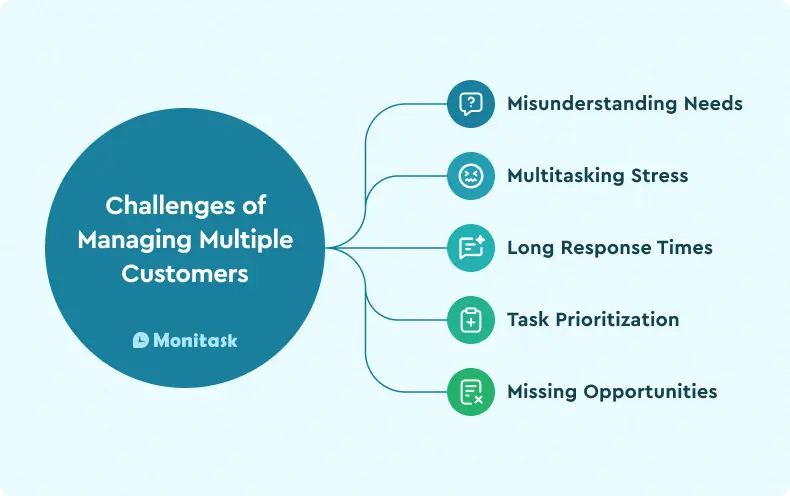
The challenge is not simply the number of customers. The real difficulty lies in managing attention, time, and expectations at the same time.
Human attention is limited. When tasks are unstructured, switching between customers quickly leads to confusion, missed details, and emotional strain. Effective customer handling is not about working faster, but about working with clarity and structure.
Without a clear approach, multitasking becomes reactive. With the right approach, it becomes controlled and intentional.
Understanding Customer Expectations During Busy Periods
Most customers do not expect instant service during busy periods. What matters more is feeling acknowledged, understanding why a delay exists, and knowing what will happen next.
When customers feel seen and informed, they are far more patient. Silence, uncertainty, and vague promises cause frustration far more quickly than waiting itself.
Managing expectations early is one of the most powerful tools for handling multiple customers successfully.
How to Handle Multiple Customers at the Same Time Without Losing Control
One of the biggest mistakes people make is trying to give everyone full attention at once. This is not possible and leads to stress and mistakes.
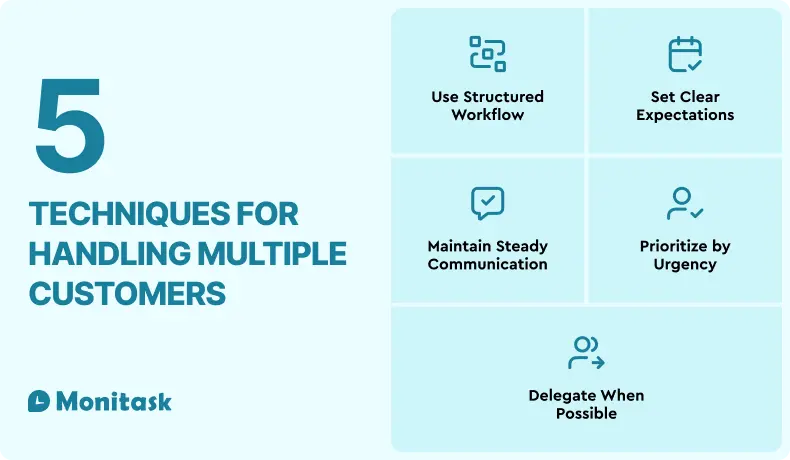
The goal is not to serve everyone simultaneously, but to manage customers sequentially with confidence. Creating a clear structure for yourself and for your customers allows you to move between interactions without losing control.
This structure includes acknowledgment, prioritization, clear communication, and reliable organization.
The Importance of Acknowledgment and First Contact
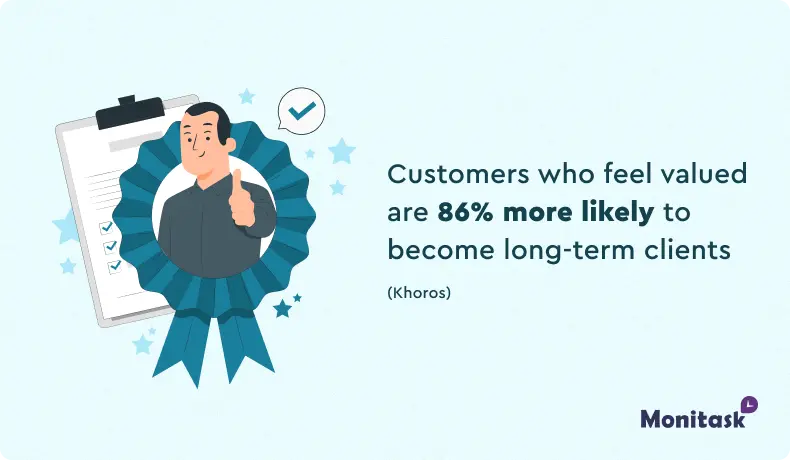
When multiple customers are present, the first moments of interaction matter greatly. A simple acknowledgment reassures customers that they have been noticed and will be helped.
Effective acknowledgment can include:
✅ Letting customers know you see them
✅ Setting a realistic expectation for when you will assist them
✅ Thanking them for their patience
These small actions buy time, reduce frustration, and allow you to complete your current task properly.
Prioritization as a Core Skill
Not all customer requests are equal. Some are urgent, emotionally charged, or quick to resolve. Others are more complex but less time-sensitive.
Effective prioritization means quickly assessing urgency, complexity, and impact. Helping customers strictly in the order they appear is not always the best approach. Knowing who needs immediate attention and who can wait ensures better outcomes for everyone.
This skill improves with experience, but it can be learned by consistently pausing to assess before reacting.
Clear Communication as a Multitasking Tool
When people ask how to handle multiple customers at the same time, they often focus on speed. In reality, clarity saves more time than speed ever will.
Clear communication reduces repeat questions, misunderstandings, and unnecessary follow-ups. Explaining next steps, setting realistic timelines, and confirming understanding help customers feel informed and reduce interruptions.
When customers know what will happen next, they are more likely to wait calmly and less likely to demand constant updates.
Staying Organized While Handling Multiple Customers
Organization is what makes multitasking sustainable. Without a system, important details such as names, requests, and commitments are easily lost during busy periods.
Successful professionals rely on consistent methods to capture information, whether through notes, digital systems, or structured workflows. Organization allows you to pause one interaction, switch to another, and return later without losing context.
This ability is essential for handling multiple customers with confidence and consistency.
Managing Stress and Emotional Load
Handling several customers at once is mentally and emotionally demanding. Customers may be impatient, upset, or demanding, and switching between emotional states can be exhausting.
Managing this pressure requires emotional neutrality, avoiding personalizing frustration, and focusing on the process rather than the pressure. Emotional regulation is a critical but often overlooked part of customer-facing work.
The Role of Active Listening in Busy Environments
Active listening may seem counterintuitive in fast-paced situations, but it actually saves time. When customers feel heard, they are more cooperative and concise.
Rushing or interrupting often leads to misunderstandings that require longer corrections later. Even brief moments of focused listening build trust and make it easier to move on to the next customer smoothly.
How Technology Supports Handling Multiple Customers
Modern tools play a major role in managing high customer volume. Ticketing systems, CRM platforms, shared inboxes, and live chat tools centralize information and reduce mental load.
These systems help track conversations, prioritize requests, and avoid duplicate responses. Technology does not replace human judgment or empathy, but it provides the structure needed to manage multiple interactions effectively.
Handling Multiple Customers Across Different Channels
Customers now communicate through phone, email, chat, social media, and in person. Each channel requires a slightly different approach.
Phone calls require immediate attention, while email allows for asynchronous handling. Live chat demands fast acknowledgment but not constant typing. Knowing when to pause one channel to address another is a key part of managing multiple customers successfully.
Dealing With Interruptions Gracefully
Interruptions are unavoidable in customer-facing roles. The goal is not to eliminate them, but to handle them without losing focus.
This means setting polite boundaries, finishing one small task before switching, and using clear transition phrases. Handling interruptions calmly prevents frustration for both you and your customers.
Avoiding Common Mistakes
Many issues arise not from customer volume, but from poor habits. Overpromising, rushing, ignoring quieter customers, or losing track of follow-ups quickly undermine trust.
Awareness of these patterns helps you adjust your approach and maintain consistency during busy periods.
Training, Practice, and Adaptation
No one masters handling multiple customers instantly. It is a skill built through experience, reflection, and adjustment.
With practice, multitasking becomes structured rather than stressful. Adapting your approach to your environment, whether retail, support, healthcare, or sales, ensures the same principles are applied appropriately.
How Leaders Can Support Teams
For managers, handling multiple customers effectively is a team responsibility. Clear expectations, adequate staffing, escalation paths, and recovery time all reduce burnout and improve service quality.
Supportive systems make high performance sustainable.
Measuring Success Beyond Speed
Speed alone does not define success. Effective customer handling balances efficiency with accuracy and empathy.
Useful indicators include:
✅ Customer satisfaction
✅ First-contact resolution
✅ Error reduction
✅ Employee stress levels
A sustainable approach benefits both customers and employees.
The Long-Term Benefits of Mastering This Skill
Professionals who handle multiple customers well are seen as reliable under pressure, organized, and ready for greater responsibility. These skills transfer across roles and industries, creating long-term career value.
Boost your business productivity
Track performance and streamline teamwork
Conclusion: Handling Multiple Customers
Knowing how to handle multiple customers at the same time is a core professional skill in today’s fast-paced, customer-driven environment.
Success comes from structure, communication, prioritization, and emotional control, not from rushing.
When handled correctly, serving multiple customers becomes a sign of competence and confidence rather than chaos.
– The Monitask Team
FAQ: How to Handle Multiple Customers
How do you keep customers calm while they wait?
Acknowledgment, transparency, and realistic timelines. When customers feel heard and understand what to expect, they are more likely to remain patient and cooperative.
Is multitasking the same as handling multiple customers?
No. Effective handling is structured task-switching, not doing everything at once. It involves focusing on one issue at a time while maintaining awareness of overall priorities.
Can handling multiple customers lead to burnout?
Yes, without proper systems and boundaries. Continuous pressure without support, organization, or recovery time can quickly affect performance and well-being.
How can beginners improve quickly?
Practice, feedback, and structured workflows build confidence over time. Clear processes and gradual exposure to higher workloads help develop both speed and composure.